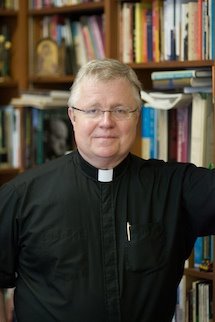
Thursday, October 7, 2010

Thoughts on Pete Seeger

It couldn’t have been a better day. The sun was shining and the temperature was just perfect as we walked into this old beat-up theatre called the “Beacon”. It’s a theatre that’s seen a lot of shows and looks it. It’s been closed for a long time, but there was a show taking place outside that would benefit the renovation of the inside. We were going for one reason, to see Pete Seeger. Yes, he’s still alive. I thought he was 90 but actually he’s 92. As I walked through this caverness theatre with the walls peeling and the ceiling coming down, my eyes spotted this thin man. He was talking to a few people and yes he was the man. The man who sang with the Weaver’s, the man who talks about Woody Guthrie like a brother, the man who has saved the Hudson River and built the Clearwater Sloop and has travelled the world. He’s not only a piece of Americana, but a piece of my life growing up. There he was with his banjo case in hand. We strolled through the doorway and I was within a few feet of him. I was acting like a little kid.

He was old now with his best years behind him and his voice rough like sandpaper. On another level, you wouldn’t know it. He was like a kid, interested in everything going on, listening intensely to the other acts that were singing and being interrupted by other people wanting to say hello. He was smiling all the time. Life was still sweet and young and good to this old geezer. I watched him intently the whole afternoon looking for clues on how I could be so engaging when I’m 92, if I make it through tomorrow.

Pete Seeger - © 2010 FocalChange & St. John's Lutheran Church

We listened to another great folk singer who was really the star of the show, Tom Chapin. He was on top of his game as he sang his own self-composed folk songs that brought a smile to your face. Seeger had not lost his politics. You could tell that he was passionate about the environment and was interested in making the Hudson River Valley a show place for the world. Now he sings in schools with children and shows up here and there for benefits but he really can’t sing anymore, at least not like he used to. I bought a CD of his called Pete Seeger 1965. His voice was different 45 years ago, as I listened to the CD. He gave wonderful background information to each song, many of which I hadn’t heard before. He was actually saving songs that were about to die or go extinct.

Pete Seeger & Tom Chapin - © 2010 FocalChange & St. John's Lutheran Church

Finally, it came his time to get on the stage and he got up there filled with lots of energy and asked us to sing along. It’s always been his style to have the audience join in as he fed us the words. The first song he wanted us to sing along with was If I had a Hammer. We all started to sing with gusto and a few tears rolled out of my eyes as the song brings up memories of my days in Oakland, CA. The audience filled with people my age watching their hair go grayer or losing it all together, were visibly moved. I could tell from the row of teenagers behind Seeger on the stage that they didn’t know the song. How could you grow up in America and not know the words to If I had a Hammer? Wow, it took me back a bit, but then again my generation was not always good at passing things down. I’ve seen it with the way we have raised our kids and even taught them the faith. Our parents seemed to have done a better job than the baby boomers that followed.

I noticed that Pete wants us to sing along and somehow that raises his voice and makes him sound better. There is something about him leading and teaching others with a song. There is a “we-ness” about the way he operates. This came out when he led us in the song, Somewhere Over the Rainbow. Towards the end of the song, he stops and looks up to heaven to apologize to it’s authors, Harold Arlen and Yip Harburg and says “please forgive me, but I have to change the words.”
Somewhere over the rainbow Bluebirds fly.
Birds fly over the rainbow.
Why then, oh why can't I?
If happy little bluebirds fly
Beyond the rainbow
Why, oh why can't I?
He says we have to change, “I” to “ We”. This song is really not about
Dorothy, but it’s about us. He says again, it’s not me that goes over
the rainbow, it’s all of us, or none of us. That’s sort of the way that
Seeger thinks. He lives locally, he works for politics locally, but his
humanity is universal and so is his theology.

Finally, I was struck by a new song that he had helped a fellow friend and songwriter who had recently had a stroke to find the words to finish the song. Interesting enough, he sang the song called “God’s Counting on Me.”

I began to smile as I sang along - Pete Seeger the old coot, there’s a preacher inside of you and a message you have to share. God’s been counting on you for 92 years and you made a difference.

We all have that chance.

Thursday, July 29, 2010

You Can't Be Serious

When I look at People Magazine, I can hardly recognize celebrities of the younger generation. I do know a few names who are probably passe as well -- Brittany Spears, Justin Timberlake and Snoop Dog. Lately, I can’t seem to avoid hearing about the misfortune of Lindsay Lohan. I don’t want to wish her ill, but she seems to have an obnoxious sense of entitlement. Having gone to rehab many times and failed, violating her probation for a drunk driving charge, and her general distain for authority, she seems to be in need of something that could correct her behavior.

She is equating her plight with women who are victims of cruelty and unusual punishment, and even sights article 5 of the Universal Declaration of Human Rights which prohibits torture and inhuman degrading treatment. She recently showed her now famous middle finger painted with a word that I can’t print here as a message to the judge and those in authority.

She is now bound to jail for ninety days which I doubt she will end up serving. What brought a smile to my face was the reaction of she and her attorney after hearing the sentence of ninety days in jail for violating her probation. She said “you can’t be serious."

The more I thought about it, the more I felt that this could be an interesting characteristic of our times. No one wants to suffer the consequences of their behavior and no one wants to sacrifice for anything. You can’t be serious.
Those may have been the words of Bernie Madoff. They could be the words of Michael Vick, they could be the words of Lehman Brothers, BP or even Goldman Sachs. Life has its consequences and its challenges, but with a little bit of luck everyone is trying to avoid them.

It was similar in Jesus’ time when the rich, young ruler didn’t want to give away all that he had.. I could hear him saying to Jesus, “you can’t be serious.” When Jesus tells his disciples they need to forgive, not just seven times but seventy times seven -- you can’t be serious. When he tells them to turn the other cheek after they have been struck already, I can hear the disciples saying “you can’t be serious.”

So, was Jesus serious when he said you’ll have to walk the extra mile and you may have to suffer for my sake and discipleship will require something of you? Yes, he was serious. And perhaps it’s time for us to look at our lives and think about taking the opportunities we have seriously. Perhaps, we need to be more hospitable to others in our lives, give more of ourselves when it comes to service here at St. John’s and be more generous in our giving, not only of our time but of our financial resources.
Perhaps the problem in our society is that we are not serious enough when it comes to being honest, sacrificing our time to help others or letting go of our financial resources and just being generous. There is a lot of talk about this but in the end a lot of people say “you can’t be serious.”

Thursday, July 15, 2010

Bob Sheppard and the Voice of God

Anyone who hangs around Yankees Stadium or watches the Yankees over the past 50 years (he started in 1951) will know the voice of Bob Sheppard who recently died at the age of 99. Sheppard was the announcer who would introduce the players as tey came up to bat. His voice was so distinctive that it became a New York fixture .Even after he was unable to come to the ballpark, Derek Jeter insisted that he be introduced with a tape of his voice. When he spoke you always knew it was him and the voice made you settle in feeling right at home in Yankee Stadium.

Voices are interesting. The voice of God in the Bible is always a way in which God communicates to us. It could be a voice coming out of a burning bush as with Moses (Exodus 3). There are also the words of the priest Eli to Samuel telling Samuel when he hears the voice, he should say “speak Lord for thy servant hears.” (1 Samuel 3: 10). And yet another instance in which we are told that God is known in the “still small voice.” (1 Kings 19: 11 – 12). In all these ways something is being communicated to us.

William Sloane Coffin was once asked in an interview “if God is saying anything to us today, what is he saying?” Coffin replied “God is not just speaking to us, he is screaming to us through the voices of the poor and sick and helpless.”

As I think about the famous voice of Bob Sheppard, who incidentally was a speech teacher by profession and loved to be a lector in his own church also see a person who loved to use his talent in a unassuming way.. As a devout Catholic he was really disappointed when he couldn’t be a lector on Sunday morning. Too often I see people read the lessons without energy, enthusiasm or panache. Lifeless words said by tired people makes you wonder.

Bob Sheppard took speaking seriously. Pronunciation, annunciation, and just plain conversation are things we take for granted today. In fact, many are just plain sloppy about communicating thoughts, ideas or feelings. Maybe we need to take a second a look at ourselves and the ways we speak. Our voices were not made for profanity or for the brutalization of the English language. Have you ever thought of the fact that God may be speaking through you, and that we are the mouthpieces of God that comes often times as a “still small voice.,” heard just the same.

In the end, announcing peoples names who come up to bat in a baseball game seems trivial and unimportant, but Bob Sheppard made something that is ordinary special. Perhaps on a Sunday morning when one is reading the lessons, on most days a rather simple task, we have the opportunity to do something extraordinary. Bob Sheppard made little things matter. Maybe there’s a lesson there for us as well.

Monday, July 12, 2010

Lesson from Nelson Mandela Part 1

I am currently reading the book, Mandela’s Way, fifteen lessons on life, love and courage. I find the book to be a fascinating study on elements that can help one build character and find the strength to live life with integrity. Mandela lived 27 years in prison. And during that time had a lot to reflect on. It’s clear that most people would have ended up broken and perhaps would have surrendered their values to find ways to survive in that very life breaking place. On the contrary, Richard Stengel argues that Mandela was taught to play the “long game”. In Stengel’s words the impatient Mandela changed.
He writes:

“As a young man, Mandela was impatient: He wanted change yesterday. Prison taught him to slow down, and it reinforced his sense that haste often leads to error and misjudgment. Above all, he learned how to postpone gratification – his whole life embodies that.”

When I read those words, it struck a chord being an impatient person myself. We all want things instantly. Speed is part of our cultural makeup. It’s hard to wait even for your computer to boot up. However, when you are involved in trying to change things in your life, it may take time for change to marinate. After all, it took years of racism and repression to be created in South Africa. It would take a long time to overcome the damage of all of this. Mandel kept a total picture in mind and like a long distance runner; Stengel wrote he became “a long distance thinker and prison was his marathon.”

The more I think about it the more important it becomes to look at your life in longer terms and to prepare yourself for the long distance you will have to travel. Faith can be the important element that allows you not to grow cynical and not to become paralyzed by the various turns in the road. I have a famous saying that came to mind when I was reading this book: “The bend in the road is not the end of the road unless you cannot make the turn.”

I am into this thing called life for the long term. There will be obstacles along the way as well as some losses. But my faith will give me hope to continue despite all of that.

Thursday, June 10, 2010

Taking a Hint from Elvis Costello

As the conflict goes on in Israel between the Israeli’s and Palestinians it gets exacerbated from time to time especially with the recent attack of Israeli commandos on the humanitarian aid ships that were heading for the Gaza Strip. We know there are complicated aspects to all of this and I certainly hope there is a wide spread investigation of the whole matter. However at this point it looks like Israel will not open it up to an outside investigation. It is unfortunate that people are not willing to take risky steps toward peace.

I was struck by a recent statement made by Jazz and Blues singer Elvis Costello who had cancelled two concerts in Israel citing the complexity of the Israeli and Palestinian conflict.
"It is after considerable contemplation that I have lately arrived at the decision that I must withdraw from the two performances.” Mr. Costello went on to write that “there are occasions when merely having your name added to a concert schedule may be interpreted as a political act that resonate more than anything that might be sung,” and he added, “I must believe that the audience for the coming concerts would have contained many people who question the policies of their government on settlement and deplore conditions that visit intimidation, humiliation or much worse on Palestinian civilians in the name of national security."
Sometimes not participating can be a political act. Elvis Costello should be applauded for his stand.

Thursday, June 3, 2010

Squandering your 911

There are many ways of looking at the presidency of the United States. I remember an interview that Tom Brokaw once had with George H. Bush when they walked through the White House. They were looking at pictures of past presidents such as Abraham Lincoln. Brokaw asked Bush about these past leaders of our country to which Bush responded they have all had their trial by fire. He meant of course that every presidency has faced some kind of an enormous challenge. Bush said that he had not yet had his trial by fire but in looking at television pictures after the first day of,” Desert Storm,” he looked tired, pale and edgy.

Perhaps he was facing his trial by fire.

Differently, Thomas Freedman in a recent column about the oil spill in the Gulf of Mexico suggested that this could be a trial by fire or better yet a 9-11 for Barak Obama. He meant that as past presidents such as his predecessor there comes a defining moment. For George W. Bush it was not only 9-11 but Katrina. Freedman’s point was that 9-11 is more than an event it symbolizes a critical moment in history and perhaps in people’s lives who have their own mini 9-11.

9-11 symbolizes on many levels a time for leadership to emerge and time for us to take advantage of an opportunity for transformation and change even though we may be standing in ashes waist deep.

Politics and history present 9-11 moments for many leaders. Meaning that after 9-11 there is an opportunity for the country to move into a new direction. The BP oil spill could be an opportunity for us to move and end our oil addiction as a country. It could be a way to utilize efforts to push our country toward real solutions in this area. Tim Shriver, the chairman of the Special Olympics said, ”Being a leader means telling the rest of us what’s our job, what we need to do to make this a transformative moment.”

You can call it a transformative moment or you can call it a redemptive moment but all of us personally have our own 9-11’s. It may be a health crisis, job loss, trouble with your teenage son or daughter, even your own marriage could be at the point of 9-11. However, if Freedman is right, and if our theology is correct all of this can become a transforming moment that will lead us into a better direction and make us all better people.

There is an old saying that says, if someone gives you lemons, make lemonade. In other words 9-11 moments are perhaps a turning point to change, for personal growth and for enrichment. You may learn more about yourself, your weaknesses and strengths than you ever knew when you are in a crisis and life seems to be going south.

Some people don’t respond in any way at all but to curl up in the fetal position. They would rather curse the darkness than light a candle. That is just another way to squander your 9-11. Our faith tells us that we should not give in or give up or surrender. I am not recommending stoicism as an answer but I am saying that Jesus always pointed people who were in dire straits to a new direction. He gave them support, he listened to them and they found strength to be different. They found ways to heal and to change. Perhaps we spend too much time not really taking a deep look at our own failures or the things that are lacking in our lives that need to be addressed. Some people can hide forever, but in the end you have squandered your 9-11.

Friday, May 21, 2010

Seven Deadly Social Sins

I am listening to the election results from the primaries that came in this morning. Kentucky and Pennsylvania had some startling elections. Arlen Specter was defeated in Pennsylvania and Ron Paul was elected against the Republican machine and Mitch McConnell in Kentucky. Pundits are saying that the American people are angry and you don’t have to be a member of the tea party to realize that between the meltdown on Wall Street, heavy criticism of health care legislation and the gigantic oil spill in the Gulf of Mexico you can become a bit disillusioned. I ran across the following quote from Mohandas Gandhi who while a Christian had a profound respect for Jesus and his teachings. In fact he knew Christian scripture so well that he was fond of quoting words of Christ frequently to friends. At times people even thought he was a Christian.

While this is fairly simple every line suggests that there is an important ingredient that is needed for success in every area from politics to worship.

Seven Deadly Social Sins

Politics without principle
Wealth without work
Commerce without morality
Pleasure without conscience
Education without character
Science without humanity
Worship without sacrifice.

~Gandhi