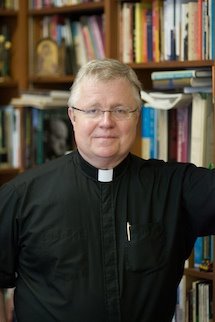
Friday, July 24, 2009

New Orleans Dispatch I.


Tag sales are over, the fundraisers seem now a distant memory as we are awoken in the middle of the night to meet at St. John’s to travel to New Orleans. We meet to climb aboard a silver bird and fly away to our destination. It is dark and wet outside and we find Bobby, Michael, Lukas, Jimmy, Andrew, Casey, Rehema, Jack, Jason, Andrea, and Suzanne huddled in the upper room like Jesus’ disciples – all but one missing: Judas (Pastor Henk). Please note all YOUTH were on time.

Our stomachs feel empty and they are, but a messenger of mercy brings us muffins, croissants and other delicacies. Thank you, Carolynn Dilworth.

Soon car keys turn and engines revv, and we head down the Hutch. We are leaving for the Big Easy but it hasn’t been so easy…. All of our fundraisers, many meetings, preparation courses seem as if they are the headwinds for our flight south to the land devastated by Katrina and Rita. But ironically these efforts were not a drag on us but enabled us to go. The first leg of our journey has everyone laughing and enjoying themselves as the plane takes off into a bit of turbulence.

Just think a piece of junk nobody wanted, a bowl of chili that someone made and sold, all of those Christmas wreaths and the Lucinda Pins that all many ordered, and that Cabaret Night where everyone brought their dishes. All these efforts added up to taking 13 of us on a trip that will live forever in our memory bank. Hey, New Orleans may not be the same after we make it our home for a week, or at least after we and the other 36,000 young Lutherans will leave on Sunday afternoon.

We want it to be home. We want to see this famous place in the history of our country that has experienced so much tragedy, heartache and pain when the levees broke only a few years back. We want New Orleans to get into our blood and into our hearts as we meet the people who live there. They are our brothers and sisters, just as the 36,000 Lutherans who will be coming from Iowa, California, South Dakota, and even Brooklyn. We come to learn, to be enriched, and to grow from this experience. New Orleans has a lot to offer and we want to be open to its great food, its music that makes you snap your fingers, and its unique architecture that inspires and takes you back to another time in Southern life. That is not the only trajectory of this journey because we will encounter a whole community of people who are labeled Lutheran. They will come in all shapes and sizes, different political beliefs, and different ways of being a disciple to our Lord. They can teach us a few things and even inspire us to bring home a few ideas for our congregation and community.

Tuesday, July 21, 2009

“That’s the Way It Is”

Walter Cronkite died last week, but his voice will always live on in the minds of listeners who grew up with his very famous newscast that always ended with “And that’s the way it is”. He became known as the most trusted man in America, and, of course, became an icon in journalism history as he covered the civil rights movement, the JFK assassination, the Vietnam war, numerous political conventions, the landing on the moon, and Watergate. A lot was being said about him these past few days, but Dan Rather said it best when he said that he had the ability “to get through the glass”. A wonderful phrase that simply describes how Cronkite came through the television set and appeared in your living room like an old uncle.

The more I thought about “getting through the glass”, the more the metaphor reminded me of the glass ceiling that women had to break through to get equal positions in business. Basically, it captures the feeling of distance between people. Cronkite was able to bridge that distance to really communicate with his audience that consisted of much of America. In a certain sense, our goal, as we try to communicate with each other, is to break through that invisible barrier to connect with people in a genuine and authentic way. We live with so much falsehood and hypocrisy, within and without the church. It is always refreshing to come upon real communication of compassion and true caring. We all want to be heard and understood. For Christians, Jesus’ ministry was always one of “getting through the glass” as he spoke to those on the margins of society as well as those in the center.

Getting through that glass is often not easy because most of us have insulated ourselves pretty well. We don’t want to be vulnerable; yet, vulnerability is what opens us up to living life more deeply. So, here is to “getting through the glass” of our self-centeredness, our attempts to be invulnerable, and our need to be the center of attention, and discovering the world of others.

Monday, July 20, 2009

Solidarity of the Sick

Today I was trying to listen to a presentation on the internet when the sound was drowned out by sirens. I shook my head in annoyance, but as I looked out the window I noticed it was an EMS ambulance speeding by the church. A fling of guilt for feeling that way ran through my body. After all, it was only two or so weeks ago when I was in an ambulance myself with two paramedics who were both professional and had a great sense of humor which made the ride a bit more comforting. Of course, when you are taking a ride like this, the journey can be a bit harrowing – something has hit you like lightning that says that for the moment you are helpless and in need of others. That vulnerable, dependent feeling is at first very frightening and later becomes a haunting ghost that visits you from time to time with a reminder by something like an EMS siren that tells you that you are not the master of the universe you once thought you were. Life can be changed in an instant, and you can even be taken out of the picture altogether.

So, I am sure I will never look at an ambulance again in the same way. Maybe even a person in a hospital bed will never look quire the same again. There is a solidarity among the sick who know the feeling of vulnerability and powerlessness. However, you are not powerless altogether. I can remember a conversation in my drugged, dizzy, and dream-like state between the patient in the bed next to mine and me. Talking through a curtain, I found his words of welcome reassuring, and later he would find my words comforting and even asked me to pray for him.

It was Paul who said: “My strength is made perfect in weakness.” Sometimes it takes a visit to the hospital to realize that.

Monday, July 13, 2009

Idols, Scandals, and the Bible

Having recently been sick and watching what seems like thousands of hours of TV, I somehow missed “sweeps week” and was stuck with “death-and-scandal week”. It seemed like I was endlessly watching the life of Farrah Fawcett, Ed McMahon, and Michael Jackson, as well as the confession of Mark Sanford, Governor of South Carolina, and the ensuing commentary. It seemed like what hell may be like – hearing a voice telling you that you will be forced for the rest of your life to watch this kind of TV. It seemed like more than enough punishment for anyone’s sins.

I came across the following paragraph written by Martin Marty, who makes an observation about the death of Michael Jackson and the recent scandal of Gov. Mark Sanford of South Carolina, which sums up my feeling better than I could:

Any phenomenologist looking in on the idol-worship upon the death of icon Michael Jackson would say that in this celebrity-adulation she has located our real religion. And we have only a line or four left for the most religiously-covered event of the week: the confessions of Governor Mark Sanford, who came back from one of history’s most publicized trysts to apologize for his “mistake” and to announce that he’s been rereading the Bible. He’s used the Bible for years in his political efforts to smash everyone who reads it differently than he does. Now it’s a more personal issue: He calls in King David, to identify with that lecher-of-old. What a week!—in “secular” America.

I guess most of us have our own way of interpreting the Bible, so that it agrees with what we think. Maybe it is just good to let the Bible address our lives, and let the chips fall where they may.

Tuesday, June 23, 2009

Father’s Day or Cat’s in the Cradle

I am writing this as we all approach Father’s Day. Many of us think that Father’s Day is just another Hallmark invention. At least, I used to think that. I mean, how many “special” days do we have to observe before there are no regular days? That is the way I felt before I became a father. I could go on and on about what fatherhood means and how challenging it is, but that would only be another sermon out of my mouth. Actually, being a father is a privilege.

Of late, two things have reminded me of fatherhood, and they aren’t my two daughters. It is the song “Cats and the Cradle” by Harry Chapin and my recent visit to my own father. I have always considered myself a good son, but remember, that is my opinion. However, I have received tons of affirmation from both my parents.

I have always found “Cats and the Cradle” a bit chilling because it presents the picture of a son becoming just like his father who was a good man but lost perspective on what was important in parenting. Namely, putting in the time to be with your children at the same time as being challenged by the responsibili-ties of job and other obligations that keep a family afloat. In the end, the song simply says, “I have become like you, Dad” or, put differently, “I have missed a lot of my children’s life by trying to be a good father and providing for my family.”

I remember coming home from college very close to Christmas and being picked up by my parents who had missed me enormously. Upon getting out of the car I asked them if I could have the car to go see my girlfriend. I can see their faces drop even now as we stood in the driveway, unloading the car. However, at that age you feel you have all the time in the world - there will be other times when we can be together. Sometimes those times never come again, though.
So, as I was sitting at the kitchen table with my father recently at his house in Sacramento, CA, I asked him, “So, what shall we do today?” He replied, “I don’t know, what do you want to do?” I shrugged my shoulders, and he said, “Just sitting here and looking at you is great.” For a moment a chill went up my spine because of the preciousness of the opportunity that had availed itself to me and the reminder that I had ignored it many times previously amid all of the “important” things I had to do.

My visits now to California are infrequent and short, much too short, and so I feel a bit haunted by “Cat’s in the Cradle”, especially the refrain, as I have to say goodbye to my father again:
And the cat's in the cradle and the silver spoon
Little boy blue and the man on the moon
When you comin' home son?
I don't know when, but we'll get together then son
You know we'll have a good time then.
Father’s Day is just another opportunity to remind dads and their children that time is fleeting, life is short, and moments together are more important than you think. Don’t miss the opportunity to connect.

Thursday, June 11, 2009

Getting Through the Lunacy of Another Day

Last year I read Elizabeth Gilbert’s book “Eat, Pray, Love”. While I do not agree with a lot of her positions on religion and faith, I thought the following quote from her book was a “right-on” observation about the practice of faith itself:
The search for God is a reversal of the normal, mundane world order. In the search for God, you revert from what attracts you and swim toward that which is difficult. You abandon your comforting and familiar habits with the hope (the mere hope!) that something greater will be offered you in return for what you’ve given up. Every religion in the world operates on the same common understandings of what it means to be a good disciple – get up early and pray to your God, hone your virtues, be a good neighbor, respect yourself and others, master your cravings. We all agree that it would be easier to sleep in, and many of us do, but for millennia there have been others who choose instead to get up before the sun and wash their faces and go to their prayers. And then fiercely try to hold on to their devotional convictions throughout the lunacy of another day.
Faith requires practice. It is not simply a cerebral activity taking place in our head that gives intellectual assent to what we believe. We are always swimming upstream, feeling the pull of gravity that will prevent us from moving forward on this journey. In the end, when you come through the doors on a Sunday morning, put a smile on your face - you made it. I am part of those who are holding on to their devotional convictions “throughout the lunacy of another day.”

Tuesday, June 2, 2009

Memorial Day

Memorial Day is an interesting day in the life of most Americans. On one hand, it is the inauguration of summer, a green light for family gatherings and BBQs. It sort of announces to many of us that we need to slow down, relax, and have a lazy weekend.

On the other hand, it is the time to remember those who have made the “supreme sacrifice” and given their lives for their country. In cemeteries, American Legion halls, and other places people gather around the flag to remember and to pray for the families who are not the same because of war. War has robbed them of their brightest and their best, with only their memories remaining.

One of the best-known poems that still touches my heart is Flanders Fields, written in 1915 by a Canadian surgeon, John McCrae. This weary doctor, having just buried someone close to the place where he was conducting surgery to save another victim of the carnage of war, wrote this:
In Flanders Fields the poppies blow
Between the crosses row on row,
That mark our place; and in the sky
The larks, still bravely singing, fly
Scarce heard amid the guns below.

We are the Dead. Short days ago
We lived, felt dawn, saw sunset glow,
Loved and were loved, and now we lie
In Flanders fields.

Take up our quarrel with the foe:
To you from failing hands we throw
The torch; be yours to hold it high.
If ye break faith with us who die
We shall not sleep, though poppies grow
In Flanders fields.
Dr. McCrae, in twenty minutes, penned lines that gave voice to the emptiness he felt as he sat across the road from a cemetery where the poppies had blossomed in the ditches adjacent to the graves.

Today, in battlefields far away, in places with strange names foreign to our ears, the poem is relived. We pray that our Lord would beat our swords into plowshares and we hope for a day when the vision of a lamb lying down with the lion would come true.